

Fashion Design is a captivating blend of creativity, craftsmanship, and innovation. Whether you’re a budding designer or a seasoned professional, mastering the art of fashion design requires a keen eye, technical prowess, and a deep understanding of the ever-evolving industry. Fashion design is a broad field that combines creativity, skill, and a profound grasp of how individuals express themselves through their wardrobes. Mastering fashion design requires striking a balance between creativity and practical understanding, regardless of your level of experience.
Start With Strong Inspiration And Storytelling:
Every iconic design starts with an idea Seeing beautiful things is only one aspect of inspiration another is intentionally examining the surroundings Powerful collection designers frequently delve deeply into feelings civilizations historical occurrences architecture or even commonplace textures The process becomes more genuine and significant when you ground your design in a story As a visual compass that directs color selections silhouettes and fabric direction mood boards aid in bringing clarity.

Master The Fundamentals Of Sketching And Illustration:
The designer’s language is sketching Because it teaches your hand and eye to communicate your thoughts fluidly hand drawing is still a fundamental ability even in the digital age Refinement of proportions exploration of shapes and visualization of movement in clothes are all facilitated by strong sketches Understanding human anatomy is a good place to start because even idealized fashion figures need proper proportions, balance, and posture Next practice drawing textures on paper such as knits silk fur or denim.
Understand Fabrics Textures And Material Behavior:
Amateur and professional designers are typically distinguished by their expertise of fabrics. When stretched stacked sewn or draped each material exhibits unique behavior A skilled designer spends time researching the movement weight thickness and durability of fabrics Understanding the differences between twill and denim or between crepe and chiffon has a significant impact on your final design Managing several fabric swatches enables you to see how your design concepts will appear when worn. Your designs become more realistic and your finished garment more polished when you learn to anticipate fabric action.

Develop Sharp Pattern Making And Draping Skills:
The engineering that goes into design is pattern-making. It creates a 3D wearable from your 2D sketch. Precision, math, and a thorough understanding of body contours are necessary for this aspect of fashion design. You can customize how your silhouette suits the human shape once you’ve mastered pattern drawing. The artistic equivalent is draping, which entails directly molding cloth onto a dress form to create shapes. Expert designers are able to confidently and creatively bring architectural designs, austere lines, and exaggerated silhouettes to life.
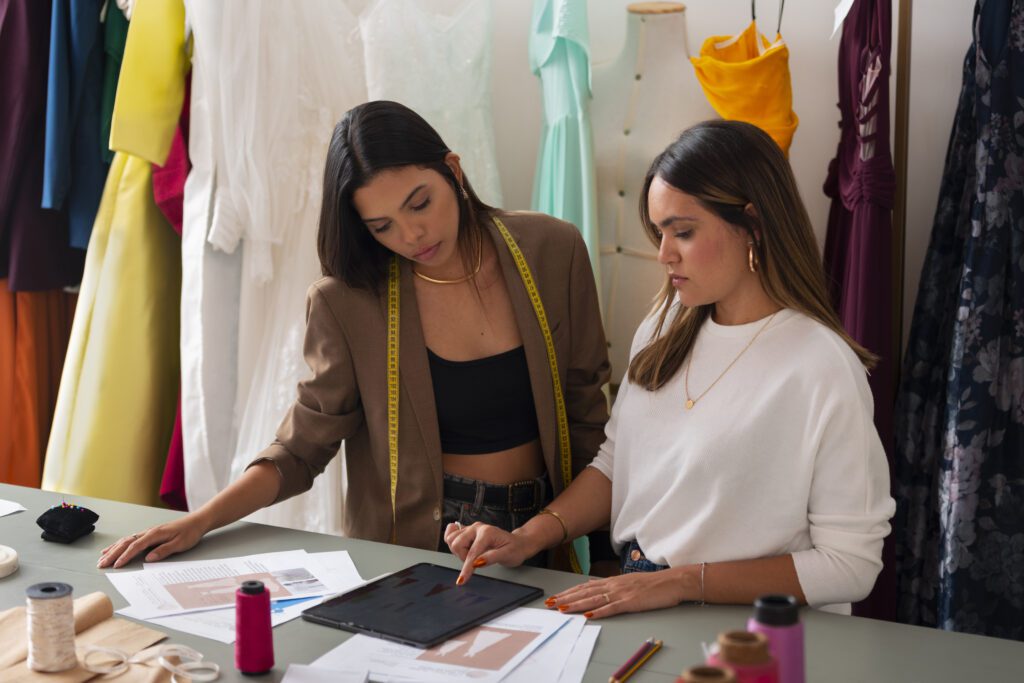
Perfect Sewing Techniques And Garment Construction:
If the structure is poor even the most beautiful design will fall short A garment’s lifespan and professionalism are determined by its sturdy fasteners clean finishes balanced seams and high quality stitching Take the time to learn about various stitch styles seam finishes sewing methods and zipper locations Your hand becomes more accurate and quick the more you practice In order to guarantee that every garment is made exactly as intended designers who are knowledgeable in construction may also interact with tailors and production teams more effectively.
Pro Points:
- Maintain a sample book with your practiced stitches and methods.
- Learn how to run industrial machinery the products are cleaner.
- To make your creations more sophisticated learn about couture finishing techniques.

Stay Updated With Fashion Trends:
Keeping up with the latest trends enables you to create clothing that feels current But becoming an expert in fashion design requires fusing your sense of style with your individuality Customers are drawn to designers who provide something distinctive Observe street style track fashion weeks examine runway silhouettes and keep an eye out for textile advances Stay true to your own style while doing this whether it’s bold prints a simple vintage revival or creative designs You stand out in the industry with the ideal fusion of market relevance and personal style.
Strong Portfolio That Shows Range And Skill:
Your visual CV is your portfolio It demonstrates your technical proficiency inventiveness and comprehension of design procedures A good portfolio tells the story of the whole process from idea to finished garment rather than just showcasing final designs Add mood boards technical flats patterns color schemes fabric choices and pictures of finished ensembles Make sure your portfolio is well organized to demonstrate your grasp of theme development and artistry. When applying to employment, internships or fashion schools your portfolio frequently makes the first impression.

Understand The Business Side Of Fashion:
A successful fashion profession requires more than just creativity. Additionally designers need to comprehend production marketing, branding and price Your standing in the industry is strengthened by your ability to cost an item of clothing acquire materials effectively and collaborate with manufacturers Create a brand identity that speaks to your audience and embodies your design principles Your designs not only impress but also sell when creativity and business acumen come together.
Explore Digital Fashion Tools And 3D Design Technologies:
A successful fashion profession requires more than just creativity. Additionally, designers need to comprehend production, marketing, branding, and price. Your standing in the industry is strengthened by your ability to cost an item of clothing, acquire materials effectively, and collaborate with manufacturers. Create a brand identity that speaks to your audience and embodies your design principles. Your designs not only impress but also sell when creativity and business acumen come together.
Develop Strong Communication Skills:
Whether you’re selling collections to buyers directing tailors working with stylists or presenting ideas to a team fashion design requires ongoing communication Effective speakers are able to identify the emotive objectives of a collection convincingly communicate technical facts and clearly convey their vision Practice makes perfect the more you express your opinions the more resilient you become. You learn to clearly defend your views while being receptive to improvement, even when they are contested In the workplace conversation also fosters positive relationships that facilitate more effective teamwork and collaboration.
Summary:
Fashion design is a potent fusion of artistic expression, technical proficiency, and creativity. Designers must develop solid foundations in order to become experts in the field, beginning with inspiration, drawing, fabric expertise, pattern-making, and garment production. Understanding color theory, dimensions, styling, and digital tools becomes crucial as talents advance. A good designer also establishes a solid portfolio that demonstrates both vision and technique, acquires practical experience, and develops communication skills. Designers may preserve a signature style by keeping up with trends while being true to themselves. In the end, fashion develops through resilience, experimentation, and a dedication to learning, producing designs that are expressive, meaningful, and ready for the market.
FAQs:
How do I start learning fashion design?
Start with the fundamentals: analyzing silhouettes, knowing fabrics, and sketching. Create basic clothing to build your foundation and use mood boards to generate ideas.
Do I need to be good at drawing to become a fashion designer?
You don’t have to be an expert artist to use sketching. Digital tools and regular practice facilitate the process. Your ability to convey concepts visually is what matters most.
What skills are important in fashion design?
Creativity, fabric expertise, pattern-making, sewing, trend awareness, color theory, and communication are all important abilities. Both creative vision and technical correctness are crucial.
How important is fabric knowledge?
incredibly vital. The drape, fit, movement and overall appearance of a garment are all determined by the fabric Understanding fabric behavior enables you to create more realistic and polished designs.
Read More Articles https://trendythreads.net/how-to-style-black-dress-for-a-formal-event/


