
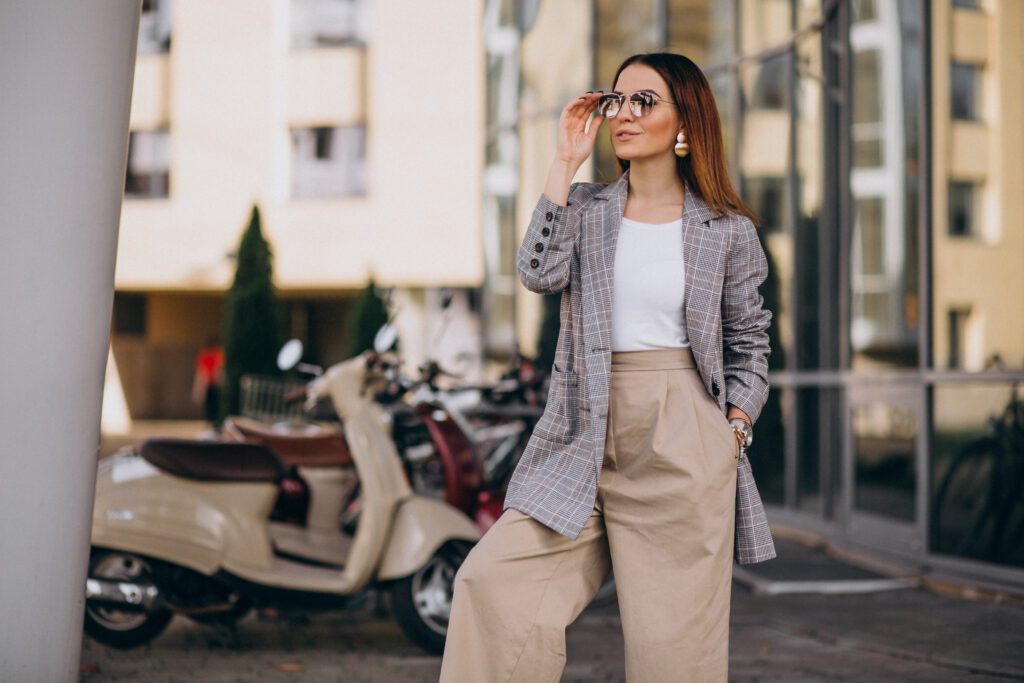
Business Casual Outfit is no longer a confusing middle ground between formal suits and weekend outfits. It has matured into a refined, flexible dress code that reflects how women actually work today. With hybrid schedules, creative offices, and evolving professional cultures, business casual now prioritizes comfort, polish, and individuality equally. This guide explores what business casual truly means in 2026 and how women can build a wardrobe that feels effortless yet professional in every work setting.
From Formal Suits To Business Casual Outfit:
The shift from formal suits to casual business Outfit describes the modern evolution of workplace fashion where Business casual is a dress code often imposed upon office workers and professionals. Instead of structured suits, ties and formal heels today’s business environments favor tailored separates, smart layering breathable fabrics and polished yet effortless silhouettes. This shift is a reflection of broader shifts in workplace culture such as remote and hybrid work methods an increasing focus on comfort and individualism and the impact of modern fashion trends like corporate minimalism and silent luxury. Professionals can exhibit their personal style while still looking respectable and competent by dressing in business casual which strikes a balance between authority and comfort.
How Business Casual Has Changed For Women?
In the past it closely observed to conventional business clothes using pencil skirts, fitted pants, structured jackets and muted colors to convey professionalism. Individuality and comfort were frequently subordinated and the concept of “acceptable” gave little consideration to modern lifestyle requirements or personal expression. These days business casual conveys comfort adaptability and self assurance. Wide-leg slacks, knit blazers, midi skirts, loafers and clean sneakers are examples of flexible pieces that are commonly accepted in many industries along with softer silhouettes and breathable fabrics. The distinction between professional and casual attire has become more hazy in hybrid work cultures enabling women to showcase their individuality while still looking put together. The contemporary method emphasizes simplicity, sustainability and genuineness demonstrating that professionalism no longer necessitates rigidity or consistency.
Why Business Casual Matters More Than Ever?
Both how you feel and how other people see you are strongly impacted by what you wear to work. Wearing business casual is essential for preserving credibility and fostering confidence. In 2026, the goal of workwear is to convey expertise and clarity through look rather than to impress through formality. When worn properly, business casual attire improves comfort, boosts productivity, and lessens decision fatigue. Instead of altering uncomfortable attire or worrying about seeming overdressed or underdressed they enable women to concentrate on their work. Women are empowered to present themselves openly while maintaining professional limits thanks to this dress code.
Business Casual vs Smart Casual:
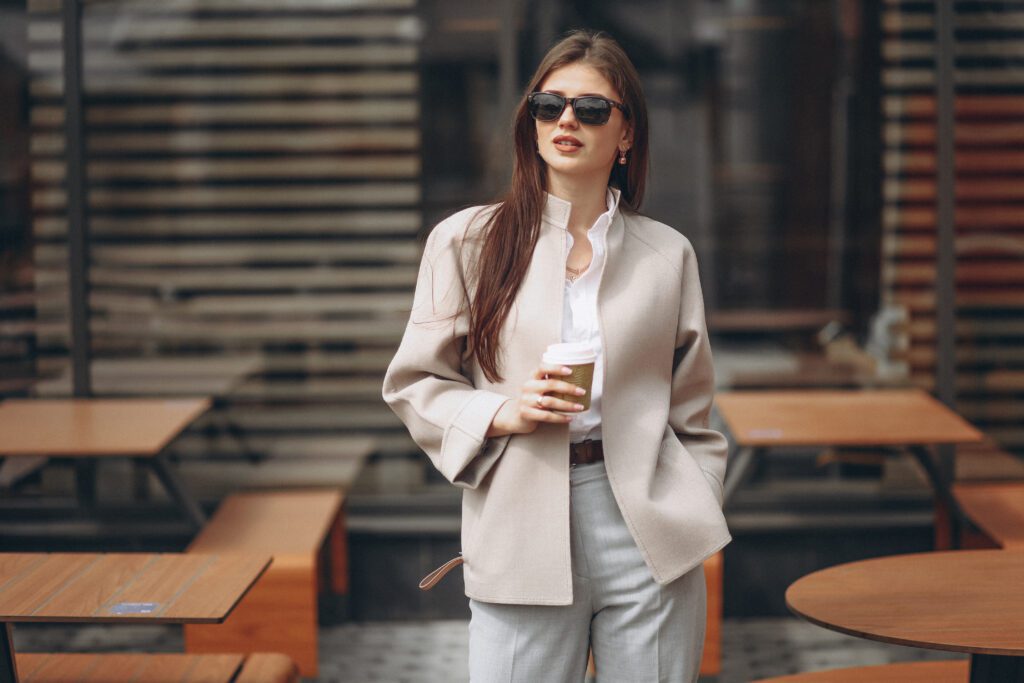
There is a great deal of confusion because HR departments often use these two names equally. But in the fashion industry there’s a clear boundary between the two, and stepping over it at the wrong moment may damage your reputation.
| Aspect | Business Casual | Smart Casual |
|---|---|---|
| Purpose | Designed for professional or office environments | Suited for social events, casual meetings, or semi-formal outings |
| Formality Level | More polished and work-appropriate | More relaxed with a stylish, fashion-forward feel |
| Typical Clothing | Tailored trousers, blazers, midi skirts, button-down shirts, loafers, low heels | Stylish tops, relaxed trousers, dresses, dark jeans, statement shoes |
| Fit & Structure | Structured or softly tailored silhouettes | Looser, trend-driven, and expressive silhouettes |
| Footwear | Loafers, ballet flats, block heels, closed-toe shoes | Fashion sneakers, ankle boots, sandals, heels |
| Colors & Prints | Neutrals, muted tones, subtle patterns | Wider color range, bold accents, playful prints |
| Accessories | Minimal, refined, professional | More expressive, trendy, and personality-driven |
| Overall Impression | Professional, dependable, and workplace-ready | Stylish, confident, and casually sophisticated |
Building Your 2026 Business Casual Wardrobe:
Let’s construct the actual closet now that the rules have been established. Investing in high quality adaptable essentials that can be mixed and matched repeatedly is the key to building a highly practical wardrobe. You need a well chosen capsule rather than a wardrobe full of clothing. The elements listed below are absolutely necessary to guarantee your daily rotation.
1. Tailored Blazer with Matching Trousers:
This continues to be the most reputable company since it conveys confidence and authority right away. The style feels softer and more contemporary in 2026 because to airy materials, neutral colors, and slightly looser tailoring. Instead of a rigid shirt, women frequently pair this outfit with a silk blouse or fine-knit top, which makes it both powerful and appropriate for extended workdays.
How to style:
For a unified look, wear a clean-shouldered, slightly loose jacket with matching high-waisted pants. Choose a neutral-colored silk camisole, soft button-down shirt, or fine-gauge knit underneath. To preserve authority, stick to a basic color scheme of black, beige, navy, or gray. To allow the tailoring do the talking, finish with block heels or loafers and little jewelry.
2. Silk Blouse with a Midi or Pencil Skirt:
A structured skirt with a silk or satin blouse is a classic business option. Because it looks sophisticated without being unduly formal, this ensemble is particularly well-liked for meetings, presentations, and leadership positions. Nowadays, midi lengths are popular because they provide comfort and style without sacrificing an elegant silhouette.
How to style:
Choose a modest-necked silk or satin shirt and tuck it neatly into a knee-length or midi skirt. Choose skirts with crisp lines or delicate pleats to provide a balance between softness and rigidity. To define the waist, add a thin belt. Finish the ensemble with low heels or pointed flats. For an elegant, leadership-ready look, this ensemble looks best in neutral or jewel tones.
3. Wide Leg Trousers with a Fitted Knit Top:
Because of their comfort and architectural style, wide-leg pants have become a modern professional classic. When worn with a fitting knit, mock-neck, or tucked-in top, this ensemble offers balance and refinement and is a choice for hybrid offices where comfort is just as important as appearance.
How to style:
To balance proportions, wear a fitting knit, mock-neck, or tucked-in top with high-waisted wide-leg pants. To maintain a sophisticated appearance, stick to solid hues and delicate textures. For extra gloss, use a lightweight cardigan or a fitted blazer. This ensemble is perfect for lengthy workdays and looks great with loafers, ankle boots, or low heels.
4. Midi Dress Styled with a Structured Blazer:
This ensemble is well-liked since it makes the most effect with the least amount of effort. When paired with a jacket, a well-cut midi dress exudes confidence, professionalism, and femininity. With just a change of shoes, it works year-round and effortlessly moves from desk work to meetings.
How to style:
Pick a midi dress that has a simple silhouette and isn’t overly flowing or tight. To rapidly improve the appearance and establish a polished outline, add a structured blazer. If necessary, use a belt to define the waist, and wear few accessories. With just a shoe change, this ensemble easily transitions from meetings to after-work gatherings.
5. Business Casual Outfit With Loafers:
As the most popular business shoe, loafers have supplanted high heels, making ensembles more functional and contemporary. When paired with fitted dresses, blouses, or pants, loafers produce a sophisticated, grounded style that is ideal for today’s comfort-focused workplace.
How to style:
Start with fitted pants or a midi skirt, then accessorize them with a classy knit top or blouse. For balance, add a structured layer or blazer For a contemporary, polished look, go for leather loafers in burgundy, brown, or black. For hybrid offices where comfort and style must coexist, this style is ideal.

Seasonal Tips For Business Casual:
Spring Fashion Outfits:
Light layering and clever transitions are key components of spring business casual. Breathable materials, such as cotton blends, crepe, and lightweight wool, keep clothing comfortable throughout the day without sacrificing structure. A sophisticated yet modern appearance is achieved by wearing casual jackets, midi skirts with knit tops, and tailored pants with soft blouses. While keeping a professional tone appropriate for the workplace, soft neutrals and subdued pastels like beige, pink, sage, and light grey reflect the season.
Summer Business Casual:
Summertime calls for simple, breezy business casual outfit that puts warmth first. Viscose, chambray, lightweight cotton, and linen blends all help control heat without sacrificing style. When worn modestly with fitted pants or midi skirts, sleeveless or short-sleeved tops can be appropriate for business-casual settings. While structured flats or low block heels preserve office-appropriate elegance, light colors like ivory, white, tan, and modest designs make ensembles crisp.
Fall Business Casual:
Intentional layering and deeper textures are key components of fall business casual. Warmth and depth are added without looking heavy by materials like knitwear, tweed, ponte, and soft wool blends. Straight-leg pants, button-downs under airy sweaters, and blazers worn over knits all contribute to a polished, well-balanced look. Fall wardrobes are dominated by earthy hues like camel, olive, rust, navy, and deep brown, which provide a chic seasonal makeover that is still appropriate for the job.
Winter Business Casual:
The emphasis of winter business casual outfit is on crisp tailoring, warmth, and structure. Wool, flannel, and cashmere mixes are examples of heavier textiles that offer insulation without sacrificing style. Fine-gauge sweaters, fitted jackets, and longline blazers stack well over knit tops or shirts. In the winter, dark neutrals like charcoal, black, navy, and burgundy look great when worn with loafers or ankle boots for a refined, businesslike look without sacrificing comfort.
“Style insights shared on this platform show why business casual outfits prioritize ease without losing professionalism.” https://outfitanatomy.blog/womens-business-casual-2026-style-guide/#wardrobe-building
Summary:
Due in significant part to shifting workplace expectations and a hybrid work culture, women’s business casual attire has developed into a sophisticated blend of comfort, adaptability, and professionalism in 2026. Modern workplace clothing is characterized by structured yet casual tailoring, breathable and sustainable fabrics, and mix-and-match basics that enable women to transition between in-person meetings and remote locations with ease. While soft colors and simple style provide personality without sacrificing polish, neutral palettes continue to serve as a basis. This makes business casual less about strict standards and more about self-expression that is self-assured and practical.
FAQs:
Q1. What defines business casual outfits for women in 2026?
A: Business casual in 2026 blends comfort with polish. It includes relaxed blazers, tailored trousers, midi skirts, smart knit tops, and minimal accessories styled in a clean, professional way.
Q2. Are jeans considered business casual in 2026?
A: Yes, in many modern workplaces. Straight-leg or tailored jeans in dark washes, paired with structured tops or blazers, are widely accepted in business casual settings.
Q3. What fabrics are most popular for business casual outfits now?
A: Breathable, sustainable, and wrinkle-resistant fabrics such as linen blends, organic cotton, soft wool, and stretch-infused materials are highly preferred.
Q4. Can sneakers be worn with business casual outfits?
A: Minimal, clean-designed sneakers are acceptable in many offices, especially when styled with tailored pants or smart dresses. The key is a polished overall look.
Q5. How has remote work influenced business casual fashion?
A:Remote and hybrid work models have increased demand for comfort-focused clothing that still looks professional on video calls, leading to softer silhouettes and flexible styling.
Read More Articles https://trendythreads.net/the-art-of-effortless-dressing-a-complete-guide-to-natural-style/


