Introduction:
Handmade Paintings have captivated human hearts for centuries, transcending time, cultures, and trends. In an age dominated by digital art and mass-produced prints, the allure of a handmade painting remains undiminished Handmade paintings are works of art that are produced solely by the artist’s hand, without the use of computers or other digital tools. Because each brushstroke, color selection, and texture is added by hand, every painting is a distinctive manifestation of imagination and feeling. Handmade paintings, in contrast to mass-produced prints, convey the artist’s genuineness and unique style that cannot be duplicated. Each handcrafted painting is unique due to subtle differences in technique, layering, or shading. This is the essence of handmade painting. These minor variations are highly valued by collectors and art aficionados because they convey the artist’s mood, style, and competence, transforming the piece of art from merely decorative to a personal narrative.
Types Of Handmade Paintings:
Oil Paintings:
- Made with oil-based pigments.
- Known for their rich colors, depth, and longevity.
- Can be textured, glossy, or matte, depending on the technique.
Watercolor Paintings:
- Created using pigments mixed with water.
- Known for transparency, softness, and fluid blending.
- Often used for landscapes, portraits, and delicate illustrations.
Acrylic Paintings:
- Fast-drying, versatile medium that can mimic oil or watercolor effects.
- Popular for both modern and abstract styles.
- Can be layered thickly for texture or applied thinly for smooth finishes.
Pastel Paintings:
- Use sticks of powdered pigment for soft, vibrant textures.
- Great for subtle color transitions and realistic renderings.
Mixed Media:
- Combines multiple materials such as paint, fabric, paper, and even found objects.
- Often used to create depth, texture, and innovative visual effects.
Ink And Calligraphy Paintings:
- Created using ink pens, brushes, or markers.
- Often emphasizes fine detail, precision, and flow.
Materials And Tools Used In Handmade Paintings:
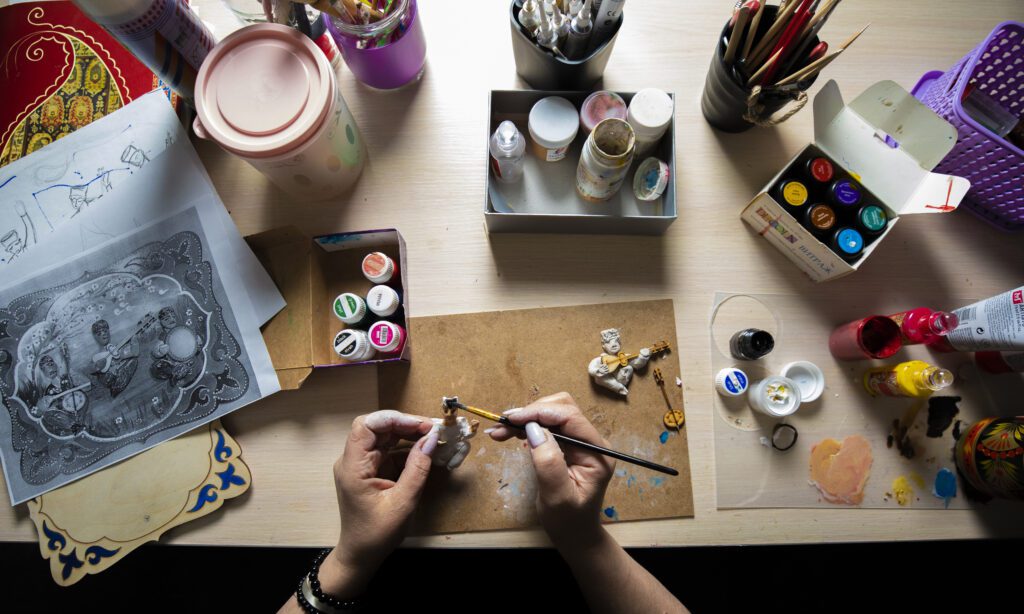
A handcrafted painting’s appearance, feel, and durability are significantly influenced by the supplies and equipment an artist selects. The most popular surfaces are canvas and paper, with variations including stretched canvas, watercolor sheets, and handmade textured paper providing a variety of painting experiences. Brushes come in a variety of sizes, shapes, and bristle types, enabling both large, expressive strokes and precise, intricate lines. The choice of natural or synthetic paints and pigments affects durability, drying time, and color richness. By altering the paint’s consistency, transparency, or finish, mediums like oils, acrylic gels, varnishes, or water allow artists to create particular textures or effects.
Techniques And Styles Of Handmade Paintings:
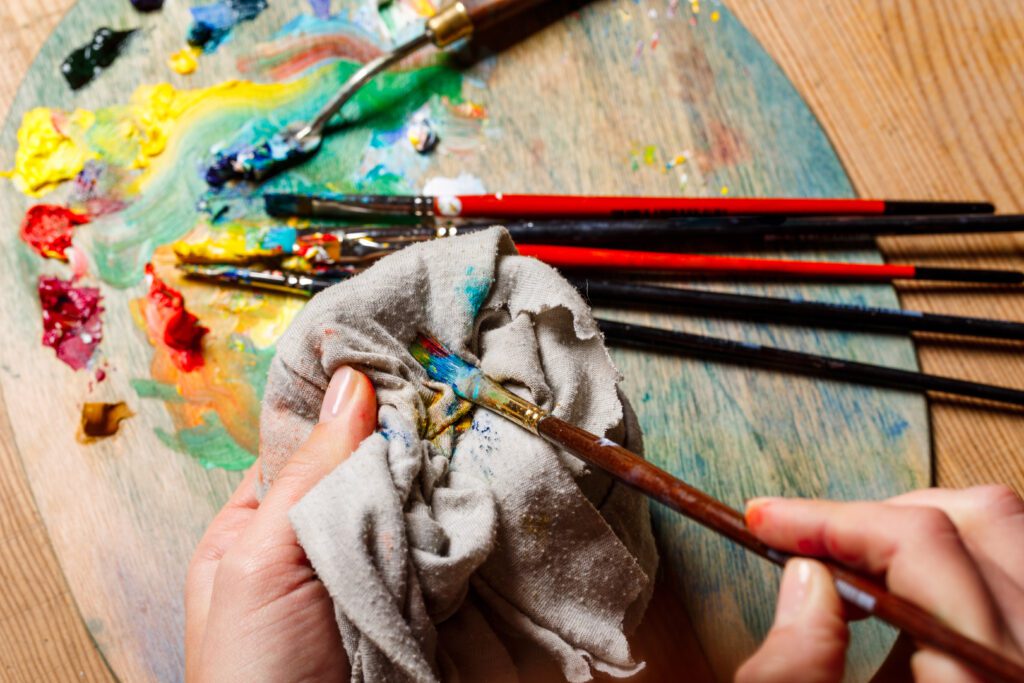
The processes used to create the artwork’s depth, texture, and emotional resonance distinguish handmade paintings. For example, impasto creates a tactile, three-dimensional surface that strikingly captures light and shadow by applying thick layers of paint. Glazing, which is frequently utilized in traditional portraiture and still life, entails applying thin, translucent coats of paint in layers to create light effects and subtle tone differences. Wash and gradient techniques in watercolor produce delicate and airy color transitions that accentuate floral and landscape paintings. Artists may produce grainy or scratchy effects with the dry brush technique, which is perfect for abstract or rustic compositions. Stippling offers fine detail and distinctive visual texture by using tiny dots to create patterns or shading.
Advantages Of Handmade Paintings:
Handmade paintings are highly prized because they provide a variety of artistic, emotional, and utilitarian advantages. Because each item is intrinsically distinct, collectors receive an original piece of art that cannot be duplicated. They are emotionally and culturally significant, connecting the viewer to the creative process by reflecting the personality, mood, and vision of the artist. Because their value frequently rises over time, particularly when the artist becomes well-known, handmade paintings are also seen as a long-term investment. Beyond budgetary considerations, they add artistic dimension to any area by using brushwork, texture, and color layering to create visual intrigue that printed reproductions are unable to match. Furthermore, a lot of paintings can be customized or commissioned, giving customers the opportunity to purchase artwork that complements particular interior designs, themes, or tastes.
Care And Preservation Of Handmade Paintings:
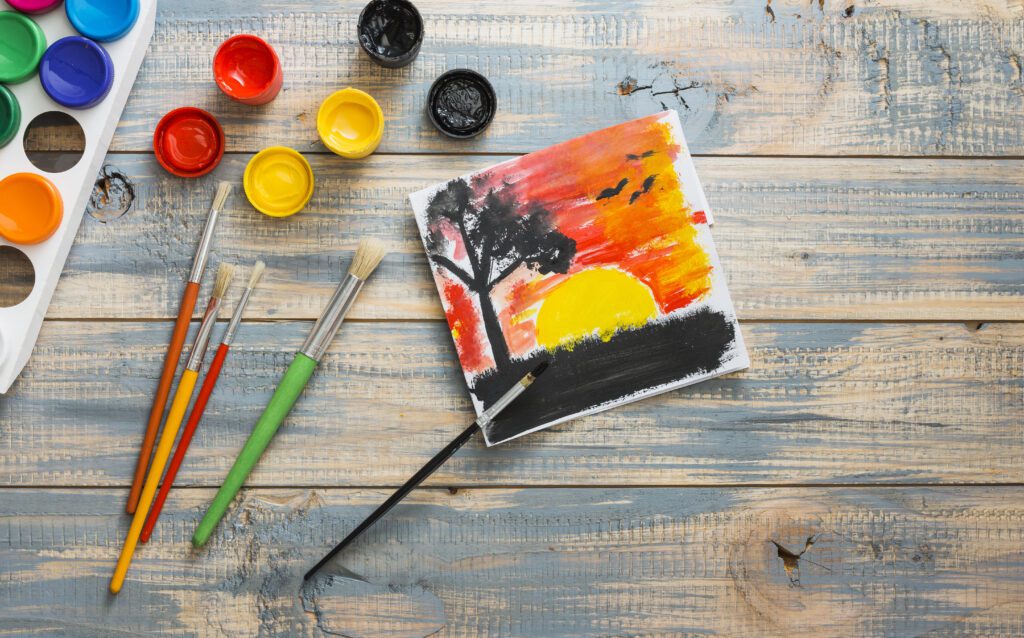
Handmade paintings must be properly cared for in order to preserve its beauty and lifespan. Humidity and moisture must be avoided to protect the surface and stop mold or paint splitting, and paintings should be stored out of direct sunlight to prevent fading and discoloration. Dusting with microfiber towels or soft brushes keeps particles out of the paint, which over time may change its appearance. The painting can be protected from dust UV rays, and physical contact by applying varnish or framing it with protective glass. Frequent examination guarantees that any early wear indicators are quickly fixed. In addition to preserving the artwork, proper handling, storage, and exhibition also protect the piece’s financial value.
Contemporary Relevance Of Handmade Paintings:
Handmade paintings are incredibly popular even in the digital age because they showcase genuine human talent and ingenuity. They are prized for their individuality and cultural diversity by contemporary collectors, home designers, and art fans. In order to connect classical artistry with current aesthetics, many contemporary painters combine traditional painting techniques with experimental materials, textures, and topics. Because they frequently include regional customs, folk art, and historical narrative, handmade paintings also contribute significantly to the preservation of cultural heritage. Handmade paintings continue to be emblems of uniqueness, human expression, and eternal artistry in a world where computerized replicas predominate. They provide something genuinely unique and priceless.
Summary:
Oil, acrylic, watercolor, pastel, ink, or mixed media are examples of traditional techniques used by artists to create one-of-a-kind paintings. Every painting is unique since it captures the artist’s talent, passion, and inventiveness. In addition to providing aesthetic appeal, investment potential, and customizing opportunities, they have cultural, historical, and emotional importance. Handmade paintings can enrich interior spaces, perpetuate cultural traditions, and be treasures. They come in a variety of styles, from abstract designs to realistic portraiture. Their longevity is ensured by proper maintenance, which includes shielding them from dust, moisture, and sunshine. Handmade paintings are still highly prized in the world of contemporary art because of their genuineness, enduring quality, and emotional impact.
FAQs:
What are handmade paintings?
Handmade paintings are one-of-a-kind pieces of art made by artists utilizing traditional materials and techniques.
What types of handmade paintings are there?
Common types include oil, watercolor, acrylic, pastel, ink, calligraphy, and mixed media paintings.
How are handmade paintings different from prints?
Handmade paintings, in contrast to prints, contain distinctive textures, brushstrokes, and color variances that are impossible to duplicate.
Why are handmade paintings valuable?
They are prized for their distinctiveness, emotional richness, cultural relevance, visual appeal, and potential to increase in market value.
Read More Articles https://trendythreads.net/thread-painting-turn-your-own-ideas-into-realistic-designs/